


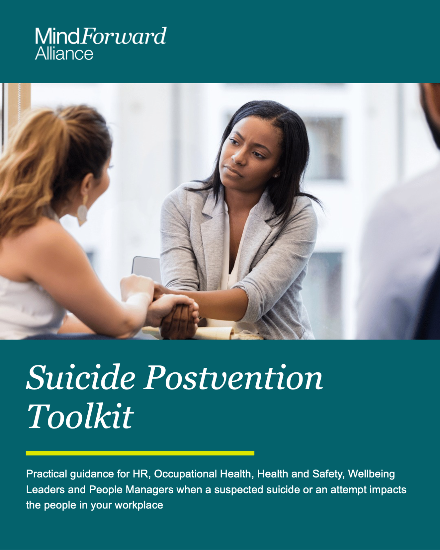
Most organisations hope they will never need a suicide postvention plan. But when a suspected suicide or suicide attempt affects a workplace, leaders, managers and colleagues are left facing difficult decisions at an already painful time. Who needs to be told, and how? What should managers say? Who might be at risk, and how do you support them in the weeks and months that follow?
Our new Suicide Postvention Toolkit, launched today is designed to help organisations answer those questions before they need to.
Why postvention matters
Postvention is the support provided after a suspected suicide or suicide attempt. It aims to reduce distress, support those affected and help prevent further suicides.
The impact of a single death reaches a long way. Research cited in the toolkit estimates that, on average, 135 people are affected by every suicide death (Cerel et al, 2019), and that around 20 suicide attempts occur for every death (World Health Organization).
While guidance on suicide awareness and intervention continues to grow, many organisations tell us they feel less prepared for what happens afterwards. The toolkit was developed to close that gap.
What's inside
The toolkit is written for HR, occupational health, health and safety and wellbeing leaders, and for people managers. Across 18 sections, it covers:
- planning before a suicide occurs, including setting up a response team and pre-preparing communications
- the immediate and ongoing response, and who is affected and how
- communication and language, including what to say and what to avoid
- support for colleagues who may be more vulnerable, and for managers and others with responsibilities
- support after a suicide attempt
- considerations for global organisations, including cultural, legal and regulatory differences between countries
- continuous learning and improvement
It also includes lived experience voices from people who have been through suicide bereavement at work, a directory of resources and support, and a postvention readiness assessment: 18 questions to help organisations see where they are prepared and where the gaps are.
Built on lived experience
The toolkit draws on the expertise of Caroline Roodhouse of Daddy Blackbird Communications, a suicide prevention and postvention consultant, and on the experiences of people who have shared what helped them, and what did not, when suicide affected their working lives.
As Alison Unsted, Chief Executive of MindForward Alliance, writes in the foreword: "Preparation is not about expecting a suicide to occur. It is about ensuring your organisation can respond with humanity, consistency and confidence if it does."
With thanks
The toolkit was produced with the support of A&O Shearman. We are grateful for their sponsorship, and to everyone who contributed their expertise and personal experience.
Download the toolkit
The Suicide Postvention Toolkit is free to download.
How we can help
If you would like support putting postvention into practice, our Suicide Awareness in the Workplace training helps managers and colleagues recognise warning signs and respond safely. Our consultancy team can also work with you to build a postvention strategy tailored to your organisation.
To find out more contact us